

Lennon's first solo album post-Beatles (not counting his avant-garde albums recorded with Yoko Ono in 1968 and 1969) was Plastic Ono Band, released in 1970. While the follow-up to this album, Imagine, is more well known and spawned the hit title track, I have always preferred Plastic Ono Band. Indeed, both albums tackle many of the same topics, but Lennon liked to refer to Imagine as his sugar-coated version of Plastic Ono Band.

Which is why Plastic Ono Band is such a shock. It opens with the ominous tolling of a funeral bell, and the lyrics, "Mother, you had me, but I never had you. I wanted you - you didn't want me. So I just gotta tell you, good-bye - goodbye." Lennon sings directly and frankly about his troubled childhood, where he lived with his Aunt and did not have a relationship with his parents. His mother (also the subject of The Beatles song "Julia") did come back into his life in his late teens, but was tragically killed by a drunk driver just as they were becoming closer. It was something Lennon would often speak about in interviews post-Beatles. This was an intense and harrowing way to start an album, for any artist, let alone an ex-Beatle. The song ends with Lennon's repeated singing turning into a scream: "Momma don't go, daddy come home." It is potent evidence of the time Lennon spent prior to the recording of the album undergoing "Primal Scream therapy" with Dr. Arthur Janov, where screaming was recommended as a form of therapy. Hence this album is sometimes referred to as the 'Primal Scream album.'
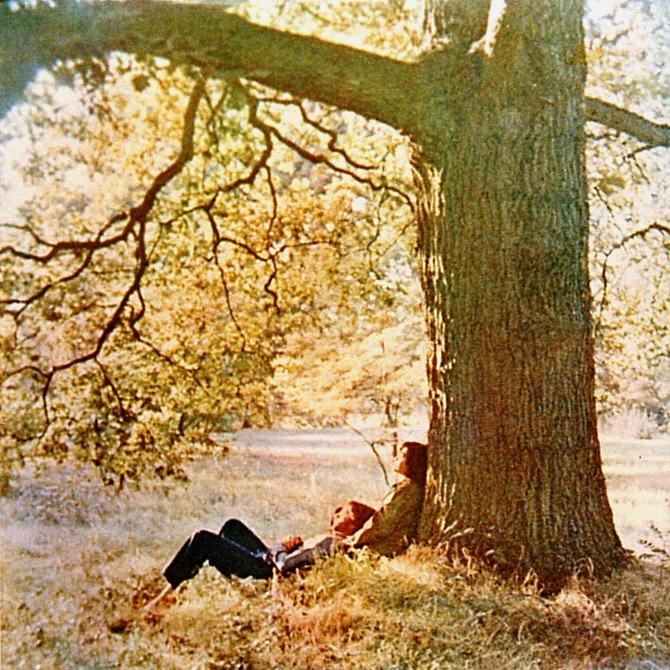
The remainder of the album carries on in a similarly personal tone. Lennon uses the album to exorcise all of his demons, many of which were no doubt exacerbated in his time with The Beatles. These songs were markedly different from his Beatles compositions in almost every way possible. Where in The Beatles Lennon would be known for imaginative, evocative, and psychedelic lyrics in songs such as "Lucy in the Sky with Diamonds," the songs on Plastic Ono Band were stark, minimal, and direct. The song titles were brief and described the topic of each.
"Working Class Hero" was a bitter rejection of the circumstances he was raised in, as well as the elements of society which require you to conform to their beliefs or teachings in order to succeed in life. Like the title suggests, "Isolation" deals with loneliness and finding someone to be with, and also appears to refer to Lennon himself when he sings, [J]ust a boy and a little girl, trying to change the whole wide world." Lennon and Yoko would embark around this time on many peace projects and demonstrations. "Look At Me" finds Lennon looking inward at himself as a famous musician and trying to reconcile how he acts with how others want him to act.
The album ends powerfully with "God" and "My Mummy's Dead." "God" is an evisceration of Lennon's idols, listing off all the things he doesn't "believe" in. The list includes Bob Dylan, Elvis, John F. Kennedy, Adolf Hitler, and most surprisingly for his fans, The Beatles. Lennon goes on to sing that "the dream is over." This is consistent with his views on The Beatles in the years following their breakup - he saw the band as an idealistic entity that had run its course and suffocated its members.
This really is a great and moving record. You cannot listen to it expecting to hear the sound of The Beatles, but it is no less rewarding. An artist bearing their soul on record like this is powerful and meaningful. Lennon was many things throughout his life, but he was always unflinchingly honest, and no record better displays that.

No comments:
Post a Comment